Tuesday, 26 April 2011

Northumbria Community Leadership Schools

My friends in the Northumbria Community asked me to let people know about some forthcoming events.  I reckon you can guarantee, good speakers, good hospitality and a good time.

Northumbria Community Leadership Schools, Nether Springs

Following on from the highly successful Leadership Schools that were launched last year, you are invited to join Roy Searle and others for this year's Schools.

Our mother house, Nether Springs, has recently relocated to its new home at Acton Home Farm, south of Alnwick in the Coquet Valley near to the Northumbrian coast. Our new monastic missional centre has ten en suite, twin or double bedrooms, a library, sitting room, dining room, offices and entrance built around a cloistered courtyard, set on a private estate, just off the A1 near Felton.

Each day will follow the pattern of a monastic rhythm, with times for prayer, reflection, rest, study, teaching input and sharing together.  There will also be opportunities to walk and visit some of the famous places that are associated with the Celtic Saints.
To book a place or for further information and details please contact office@northumbriacommunity.org or telephone 01670 787 645

Missional Leadership School
Monday 6th to Saturday, 11th June, 2011
The challenges and opportunities of missional living and leading require new ways of being and exercising leadership.  Join George Lings and Roy Searle as they explore some of the key issues facing leaders in a changing church and culture.  Based around the rhythm of the monastic day, time will be spent alone and together exploring these issues with other leaders in a supportive environment.
Cost, including full board accommodation, £285.  To book a place or for further information and details please contact office@northumbriacommunity.org or telephone 01670 787645.

Prophetic Voices
Monday 5th to Friday, 9th September, 2011
Join Roy Searle and Stuart Murray Williams of the Anabaptist Network looking at what the new monastic, Celtic and Anabaptist Traditions have to say to leaders in the midst of a changing church and culture.  Based around the rhythm of the monastic day, time will be spent alone and together exploring these issues with other leaders in a supportive environment.  Cost, including full board accommodation, £230.
To book a place or for further information and details please contact office@northumbriacommunity.org or telephone 01670 787645.


Change and Transition Retreat
Monday 7th to Saturday, 12th November, 2011
This retreat, led by Roy Searle and Pete Askew, opens up ideas of how to lead through the challenges and opportunities of change by strengthening relationships, facilitating creativity, fostering innovation, promoting growth and development, whilst still facing issues of conflict and building community.
Cost, including full board accommodation, £285.
To book a place or for further information and details please contact office@northumbriacommunity.org or telephone 01670 787645.


Please see some of the feedback from the last Leadership School held last year:-

It was really excellent. I enjoyed the people and the environment. There was a good balance between teaching, praying and relaxing.

The Leadership School provided a valuable time to pause together as church leaders and focus on our relationships with God, self and others. Thanks to the Northumbria Community for facilitating this for us.

Refreshing, inspiring, liberating!

Tuesday, 19 April 2011

Review of Morna Hooker and Frances Young's "Holiness and Mission"


A renowned New Testament scholar and an eminent theologian deliver a series of lectures on Mission and Holiness, looking for lessons for today’s church from the remarkable growth of Christianity in the urban centres of the Roman empire.   Intriguing.

Morna Hooker, offers an account of mission in the scriptures from Israel through Jesus to the New Testament church.  She detects a common thread originating in the call to God’s people to be Holy as God is holy.   This Holiness is social holiness, a particular people living an ethically distinct life in the midst of other peoples, thus pointing to the reality of God and offering an embodied invitation to come, know and worship.  Words alone, whether proclamation or personal testimony, aren’t enough.  Witness is dependent on corporate godliness, ecclesial bodying forth of Christ the God-revealer.

According to Hooker, living the holy life in a city offers particular challenges.  The Bible is ambivalent about urban living.  From Babel through Babylon to Rome the city is a place of alienation, corruption and hubristic rejection of God.  Both Jesus and his followers meet the challenge of urban godlessness and in so doing offer a challenge to the cities that sought their death.  Yet in the vision of Zion restored and Babylon/Rome become the heavenly Jerusalem, scripture offers us assurance that God isn’t done with the metropolis.  So, the church today is called to meet the challenge of the city and to offer a challenge to the city by living otherwise, thus pointing to the promise of the city, God’s promise.

In her treatment of early church growth Frances Young also emphasises the significance of holiness, the quiet, distinctive, engaged presence of the first Christian communities.  She recognises that early Christian mission took many forms including demonstrations of power through exorcism and healing, remarkable confidence in the face of death and verbal announcement of gospel.  But it is the presence of Christian networks both like and unlike Roman institutions, quietly overlapping the structures of society and offering a place to belong, a sense of identity, practical care and a distinctive philosophy that gets most of the credit.  The church grew because it was an articulate, attractive anomaly.

Young then ventures beyond Constantine when the booster rocket of state of approval carried church growth into stratospheric dimensions.  She offers us a welcome, nuanced rendition of an oft told story – church moving from household to basilica, from lifestyle to religion, from radical alternative to the mainstream, from simplicity to flamboyant dazzle.  Mission becomes enculturation and growth through conquest; organic, grass-roots life becomes top-down establishment and as society is Christianised, the church is de-Christianised.

And the implications for today?  What is called for is an integration of verbal witness and embodied witness, rooted in social holiness.  We could do worse than allow Marshall McLuhan to provide commentary on Leviticus:  be holy as I am holy – the medium is the message.

All in all then not a bad little book.  Not bad, but not great.  I can find nothing with which to take exception in Hooker and Young’s exposition and I approve their central message but I’d hoped for more.  A book by these two commended heartily by James Dunne and David Ford is one that I was eager to read but one that taught me very little.  All too familiar.  I was much more impressed by the Kreiders’ Worship and Mission after Christendom which tells a similar story and offers a similar vision.  Still, I’ll probably use Hooker and Young as a set text for my first year course on mission.  It’s short, clearly written, reliable and makes some important points; ideal for those beginning to study missiology.  If that’s how you see yourself, go ahead but if you want more than an introduction I’d look elsewhere.

This review was originally written for Regent's Reviews and is reproduced here with permission of the editor.  Check out the web site to get a free pdf of a whole bunch of reviews.

Sunday, 20 March 2011

Preaching as Testimony

Now I don't plan to make a habit of this but here's another post quoting a chunk of a book on preaching.  I guess that's what happens when you resolve to post regularly(ish) on Sunday evenings and then you spend Sunday afternoons preparing for Monday morning's homiletics class.

We are looking at preaching as a form of testimony so we're still in Ricoeur and Brueggemann territory. However, to spare the class from my Brueggemannamania I'm channelling what he does with Ricoeur's testimonial hermeneutics through Anna Carter Florence.  This comes from her excellent Preaching as Testimony.  [Yes I know I should have turned that into a nice convenient amazon link but If you thinking of getting a copy of the book - and you really should - I'd quite like you to do it via the Stuff I Recommend box on this blog.  You'll need to go to page two of the widget.]

… preaching cannot be the proclamation of absolute truth; it never has been.  There is no such thing as infallibility or inerrancy; there are no universal truths for us to access or own at will.  There are only fleeting glimpses of the truth we see and confess in Jesus Christ, the truth that encounters us, in concrete human experiences, by the grace of God.  Preaching is testimony: a proclamation of what we have seen and believed.  It is claim and confession rather than absolute and certitude.  And because the context for testimony is one of struggle and divergent opinions … a sermon like any other testimony, must make its way in the world as best it can, through an invitation to believe rather than a command to obey.

All of which sounds rather appealing to this preacher.  An approach to preaching with more modesty and thereby, more authority.

Sunday, 13 March 2011

On Re-reading Brueggemann

Just been re-reading the introduction to Finally Comes the Poet in preparation for tomorrow's homiletics class when we'll be looking at preaching, poetry and imagination.  I'd forgotten just how good it is.

Walter Brueggemann's writing about preaching does for the preacher what he suggests the preacher should be doing for the congregation.  This is truly poetic, visionary, prophetic writing construing the preacher as a wielder of words and spinner of worlds potently prophesying.   At times his vision might sound unrealistic, too fantastical for the mundane reality of Sunday by Sunday sermonising.  But that's the point.  Here is inspiration, here are words to thrill, an evocation of the possibilities of the sermon daring the preacher to believe.  Thanks Walt.

If you get to preach but haven't read it, do yourself favour, treat yourself.  If you have read it, do yourself a flavour, remind yourself.  Here's how he ends his intro, wrapping up, or rather unwrapping still further, what he's had to say about the sermon as a four way coming together of text, people, preacher and eye popping Holy Spirit.

The meeting involves this old text, the spent congregation believing but impoverished, the artist of new possibility, the disclosure.  The Prince of Darkness tries frantically to keep the world closed so that we can be administered.  The Prince has such powerful allies in this age.  Against such enormous odds, however, there is the working of this feeble inscrutable, unshackled moment of the sermon.  Sometimes the Prince will win the day and there is no new thing uttered or heard.  Sometimes, however, the sermon will have its say and the truth looks large - larger than the text or the voice or the folk had any reason to expect.  When that happens, the world is set loose toward healing.  The sermon for such a time shames the Prince and we become yet again more nearly human.  The Author of the text laughs in delight, the way that Author has laughed only at creation and at Easter but laughs again when the sermon carries the day against the prose of the Dark Prince who wants no new poetry in the region he things he governs.  Where the poetry is sounded the Prince knows a little of the territory has been lost to its true Ruler.  The newly claimed territory becomes a new home of freedom, justice, peace, and abiding joy.  This happens when the poet comes, when the poet speaks, when the preacher comes as poet.

Thursday, 10 March 2011

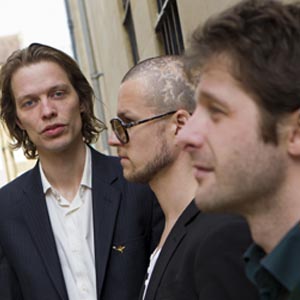
Phronesis

Well, it was Phronesis what did it.  I've spent most of the past three months demonstrating my ability to multi-task.  In a sustained manner I have simultaneously being doing two things: 1) telling myself that it would be good to start blogging again and 2) not starting blogging again. (The adverts in Dec and Jan don't really count.)

My blog abstinence is not evidence that I have got my church calendar all to cock, confusing epiphany with lent.  It's nothing other than the old road to hell thing. Three months is quite a delay don't you think?  If that, is there are still any you's out there reading this stuff.  (Helloooooo!) I'm sure my blog is actually echoing like a big old empty cave….  ave ave ave.

Of course this is not the first time I have had extended blogging down time.  When this has happened before something or other has come along and got me at it again, something like a cracking film or a stimulating lecture or a mundane insight that seemed utterly brilliant at the time.  This time though, as I said, it was Phronesis what did it.  By 'eck they're good!

Went to see them a couple of nights ago at Band on the Wall, Manchester's splendid live music venue.   How good are they?  Well if you kind of quite like jazz but are absolutely sure you don't get the stuff at the more creative/avant garde end of the spectrum Phronesis are the band to change your mind.  Talk about energy!  Talk about imagination!  Talk about swinging!  Talk about tight!  Piano that is by turns lush, frantic and icily spare.  Drumming that really really really does use the kit as a melodic instrument.  And bass playing that actually made me change my mind about bass solos.  No, really. 

If you want a listen I'd start here or better still go hear them live.

Wednesday, 9 February 2011

Urban Expression (Manchester) Open Day

Interested in urban mission?  Curious about church planting?  Book in for this then.  Go on.

Friday, 17 December 2010

BMS and Urban Expression Announce New Partnership


News just released of an exciting new partnership for cross cultural mission in British cities.